
If you’ve ever sourced small custom tins in bulk, you already know one thing:
on paper, they all look similar. Whether you're searching for custom mint tins or bulk prayer boxes, the devil is always in the details.
In reality, those details decide everything — cost, lead time, compliance, and whether the tin actually works for your product.
Over the past few years, we’ve handled an increasing number of inquiries for small-format tins. Some come from established food brands, others from niche markets with very specific expectations. What they all have in common is this: buyers don’t want a “tin box” — they want a packaging solution that won’t create problems later.
Small tins are often underestimated, especially by buyers comparing them to plastic or paper alternatives. But in practice, they offer a combination that’s hard to replace.
From a manufacturing standpoint, custom tin packaging in smaller sizes benefits from:
From a buyer’s side, small tins are durable, reusable, and visually strong — which is why they remain popular in food, gifting, promotional, and religious applications.
This is also why many buyers start their search with manufacturers rather than trading companies when volume and consistency matter.
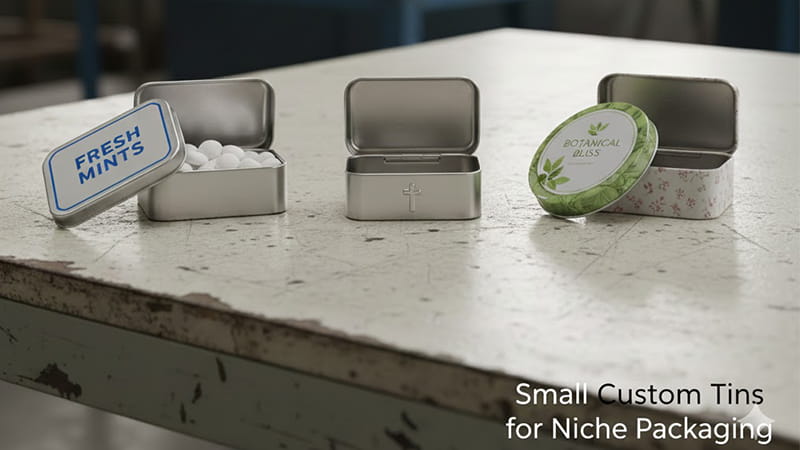
Among all small tins, mint tins remain the most standardized and widely produced. That doesn’t mean they’re simple.
Buyers sourcing from mint tin manufacturers are usually balancing three priorities at the same time: food safety, branding impact, and unit cost.
Food-grade internal coatings to prevent odor transfer
Most mint tin projects rely on proven dimensions, which helps control tooling costs. However, design upgrades such as embossing, matte varnish, or metallic inks can quickly change production complexity — something buyers should confirm before finalizing artwork.
From experience, early communication on these details saves far more time than last-minute revisions.
Prayer boxes sit in a very different category. They may not generate the same volume as mint tins, but when buyers search for tin prayer boxes in bulk, they usually know exactly what they want — and what they want to avoid.
These projects often come from:
From a factory perspective, prayer boxes often share structures with other small tins, yet require more attention during sampling and approval. This is where experience with niche tin packaging becomes more important than simply offering the lowest quote.
Beyond mint tins and prayer boxes, we see growing demand for small tins used in:
Many of these projects start cautiously, then scale faster than expected. Buyers who work with flexible tin packaging suppliers are usually better prepared to handle design adjustments, reorders, and seasonal demand without changing packaging formats.
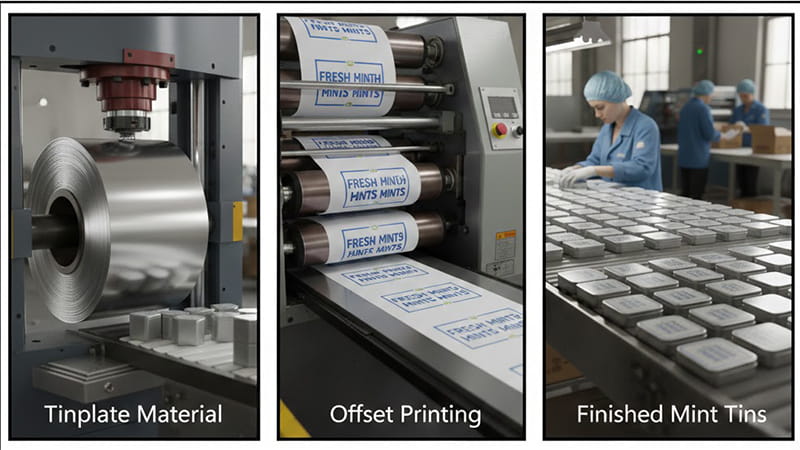
Regardless of application, these points are worth clarifying early:
Can existing molds be reused?
Shared tooling often makes the difference between a viable project and an expensive one.
Ask about:
Small tins show defects more easily — quality control matters.
Some tin packaging suppliers offer low initial MOQs but struggle with consistency on repeat orders. If your product relies on long-term supply, this matters more than the first quote.
What’s changing is not demand — it’s buyer expectations.
Small tins are increasingly used for products tied to brand identity, gifting value, or emotional significance. That means less tolerance for quality variation and more focus on compliance, finish, and repeatability. At the same time, brands want shorter runs, faster turnaround, and the ability to refresh designs without restarting the entire tooling process.
For buyers, the smart move is working with manufacturers who understand both high-volume items like mint tins and specialized products such as prayer boxes, rather than treating every small tin as interchangeable. As regulations tighten and customization becomes the norm, flexibility and manufacturing experience will matter far more than chasing the lowest unit price
Obtenez les dernières informations et offres spéciales


 Réseau IPv6 pris en charge
 Français
 English
 Deutsch
 Español
 Português