
When food and beverage brands start sourcing tin cans wholesale, most discussions begin with price, MOQ, and delivery time. At that stage, almost every supplier looks similar on paper.
The real differences usually appear later — during compliance checks, sample approval, or mass production — when changes become expensive and time-sensitive. In practice, choosing the right tin can wholesale supplier has a direct impact on food safety approval, launch schedules, and whether your packaging supply can support long-term growth.
This article shares practical considerations food brands use to evaluate tin can manufacturers, based on real production and export projects rather than theoretical checklists.
A situation we see often:
A brand confirms packaging, places an order, and only discovers mid-production that the supplier lacks food-grade experience or stable quality control.
In wholesale tin packaging, mistakes rarely show up at the quotation stage. They surface during production or shipping, when delays or compliance issues can disrupt product launches. A reliable tin can wholesale supplier helps prevent these risks by identifying potential problems early and addressing them before they affect delivery.
Common challenge:
“We worked with a metal box supplier before, but they had never handled food packaging.”
Food-related tin packaging wholesale requires familiarity with food-contact coatings, odor control, and regulatory expectations. Manufacturers with real experience in tea tins, cookie tins, or coffee tins understand these requirements and avoid trial-and-error production.
Factories like ours focus heavily on food packaging projects, which helps maintain consistency across repeat wholesale tin box orders.
Where issues often arise:
Inconsistent tinplate thickness or unstable surface treatment can lead to deformation, coating failure, or rusting over time.
Professional tin can manufacturers control raw material sourcing and verify tinplate specifications before production. For brands planning ongoing tin can wholesale orders, material consistency is just as important as initial appearance.
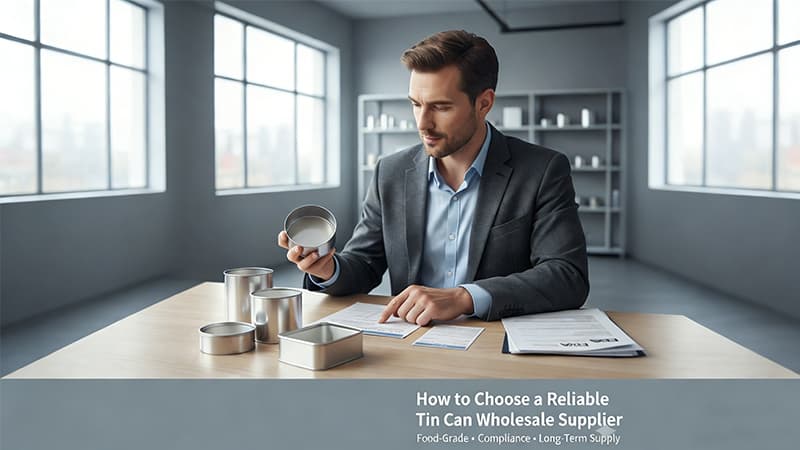
Most food brands require custom sizes, printed designs, or structural adjustments. A capable wholesale tin box manufacturer should not simply accept drawings, but also advise whether a design is structurally sound, cost-effective, and suitable for mass production.
This consultation stage often separates experienced manufacturers from basic suppliers.
A real-world problem:
A shipment of coffee tins is held at customs because the importer cannot provide documentation proving the internal coating meets EU LFGB standards.
Food-grade tin cans wholesale must comply with regulations such as FDA standards for the US market and LFGB requirements for the EU. Reliable tin packaging wholesale suppliers prepare these documents proactively rather than reacting after a problem occurs.
Experienced tin can manufacturers use certified food-contact coatings and low-odor printing inks. More importantly, they can provide material safety data sheets and test reports when requested, helping ensure smoother customs clearance and fewer regulatory delays.
OEM production is suitable for brands with finalized designs and specifications. In this model, the tin can factory according to approved artwork, structure, and packaging requirements.
For newer brands, ODM services help shorten development time. The manufacturer assists with structural design, mold selection, and cost optimization based on existing production experience.
We have supported food brands that moved from concept to mass production within tight timelines by leveraging this type of collaboration.
Structures such as hinged lid tins, sliding tins, or window tin boxes require technical evaluation. Skilled tin box manufacturers assess durability, production efficiency, and long-term usability before confirming feasibility.
A frequent buyer question:
“Can this supplier support us now and still handle larger volumes later?”
Clear communication at this stage helps avoid misunderstandings in future wholesale tin can orders.
Most tin packaging wholesale projects require 25–40 days for production. A professional tin can wholesale factory provides realistic timelines and keeps buyers informed throughout the process.
We have worked with food brands that began with small trial orders and later scaled to multi-container shipments without changing suppliers. This continuity is one of the main benefits of choosing the right tin can manufacturer early.
A common complaint:
“The sample looked perfect, but mass production didn’t match.”
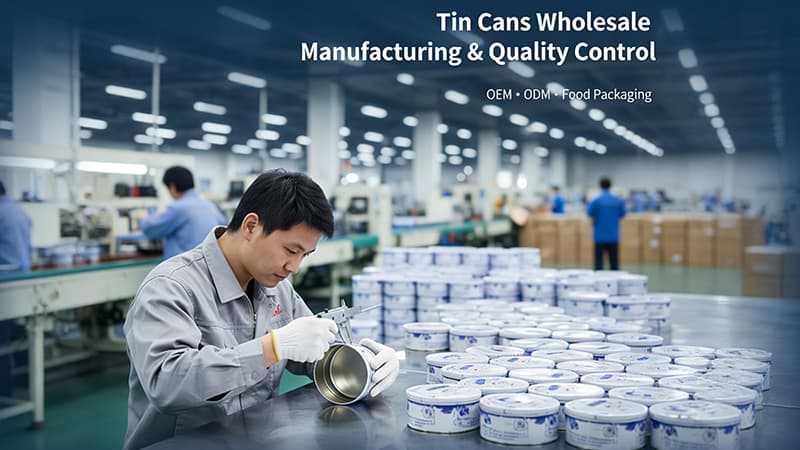
Reliable tin can factories conduct routine in-process inspections, including seam checks, coating thickness measurement, and print color comparison.
In operations like ours, manual inspections and random line sampling help identify issues before packing rather than after shipment.
Experienced tin cans wholesale exporters understand international packing standards, palletization, and documentation requirements. This knowledge reduces shipping delays and prevents damage during transport.
A structured sampling process allows buyers to confirm structure, finish, and print quality before mass production, especially for custom tin packaging wholesale projects.
Low prices often hide compromises in material quality or process control. For food packaging, stability and compliance are more valuable than short-term savings.
Failing to confirm food-grade documentation early can result in customs delays or rejected shipments.
Some suppliers manage small orders well but struggle with scale. Evaluating long-term production capacity avoids repeated supplier changes.
China offers a mature tinplate supply chain, skilled labor, and extensive experience in custom metal packaging wholesale. These factors allow Chinese tin can manufacturers to provide competitive pricing, flexible OEM and ODM services, and consistent quality.
For many international food brands, working directly with a manufacturer improves transparency, cost control, and scalability.
Choosing a tin can wholesale supplier is not just about sourcing packaging — it is about building a stable supply relationship.
If you are currently evaluating tin packaging wholesale partners for your food brand, starting with a detailed inquiry and sample request is often the most effective first step. A professional tin can manufacturer will be willing to review your product, budget, and timeline, and provide clear recommendations along with a transparent quotation.
Contact us or request a quote to discuss your specific tin packaging requirements and explore suitable solutions.
Obtenez les dernières informations et offres spéciales


 Réseau IPv6 pris en charge
 Français
 English
 Deutsch
 Español
 Português