
Your premium loose leaf tea tastes flat after a few weeks?
Chances are, the container is to blame — not the tea.
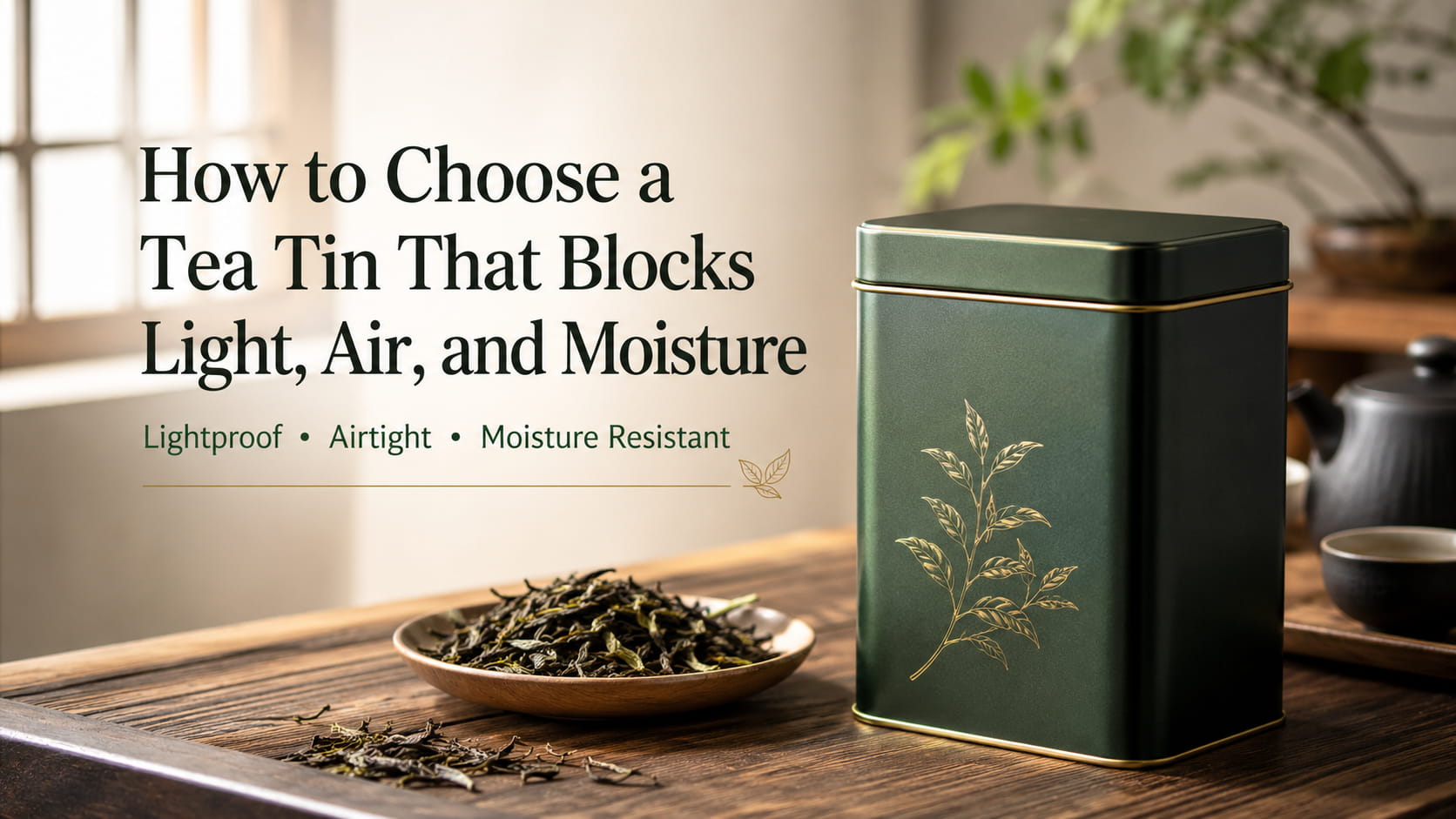
Tea leaves react quickly to light, air, moisture, heat, and surrounding odors. A transparent jar may look attractive on a kitchen shelf, but it cannot always protect the aroma, color, and flavor of tea. For commercial tea packaging, this problem becomes even more important. The tea may sit in a warehouse, on a retail shelf, or under display lighting before customers open it.
A good tea tin should do three things well:
It should block light.
It should reduce air exposure.
It should help keep moisture away.
This guide is mainly written for tea brands, tea companies, packaging buyers, and commercial tea packaging projects. Home users can also follow the same principles, but they do not always need every professional structure mentioned below.
1. Start with the Tea Type
Before choosing the shape, printing, or lid, start with the tea itself.
Different teas need different levels of protection. Green tea and matcha are more sensitive to light, moisture, and oxygen. Black tea and roasted oolong are usually more stable. Herbal tea can be bulky and may absorb odors easily. Tea bags often need efficient display and easy access.
| Tea Product | Main Concern | Suggested Tea Tin Structure |
| Green tea | Light, air, moisture | Opaque tin + inner foil bag + double lid |
| Matcha powder | Moisture, air, odor | Screw-top tin + inner liner or sealing ring |
| Black tea | Aroma protection, daily use | Plug lid, slip lid, or double lid |
| Light oolong tea | Aroma retention | Double-lid round tea tin recommended |
| Roasted oolong tea | Daily storage, aroma protection | Round or square metal tea tin with tight lid |
| Herbal tea | Volume and odor absorption | Larger tin + inner bag |
| Tea bags | Display and convenience | Rectangular or hinged-lid tin |
| Premium gift tea | Freshness and brand value | Custom tea tin with refined finish |
This first step helps you avoid two common problems: over-packaging simple products and under-protecting high-value tea.
Light protection is one of the main reasons tea brands choose metal tea tins.
Clear glass and transparent plastic show the product directly, but they also allow light to reach the tea leaves. This may be acceptable for short-term home storage in a dark cabinet. It is less ideal for retail packaging, where tea may stay under shelf lighting for weeks or months.
A metal tea tin solves this problem directly. Tinplate, aluminum, and stainless steel all block light much better than transparent packaging.
Tea brands often choose tinplate because it offers strength, printability, recyclability, and cost-effectiveness. It also supports many custom options, including:
Round tea tins
Square tea tins
Rectangular tea tins
Mini tea tins
Double-lid tea tins
Custom-shaped tea tins
Embossed or debossed logos
Matte, glossy, or metallic finishes
For tea products that focus on freshness, aroma, or premium positioning, a fully lightproof tea tin is usually a safer choice than packaging with a clear window.
The tin body blocks light. The lid controls air and moisture.
No single lid works best for every tea product. Choose the lid according to tea type, shelf life, price point, and customer usage.
Suitable for: premium loose leaf tea, green tea, light oolong tea, black tea, gift tea
Strength: The inner lid and outer lid create two layers of closure. This gives significantly better protection against air and moisture than a single loose lid. It also improves the opening experience.
Note: It costs more than a simple lid, so it is better for mid-range to premium tea products.
Suitable for: matcha, powdered tea, small loose leaf tea packs, travel-size tea canisters
Strength: The screw structure closes more firmly. When used with an inner liner or sealing ring, it improves resistance to air and moisture.
Note: It works well for repeated opening and closing, especially for powder products.
Plug lid or slip lid tea tin
Suitable for: daily black tea, roasted oolong tea, loose leaf tea with inner bag
Strength: This structure is simple, clean, and cost-effective. It is also easy to produce in different sizes and shapes.
Note: Lid fit matters. A plug lid should feel smooth but not loose.
Suitable for: tea bags, samplers, promotional tea packaging, fast-moving products
Strength: A hinged lid is easy to open and convenient for daily use. It also works well for rectangular tea tins and gift sets.
Note: For high-moisture or high-value loose leaf tea, avoid relying on a hinged lid alone. Use an inner foil bag if freshness protection matters.
Suitable for: premium tea, coffee, herbs, spices, aroma-sensitive products
Strength: The clasp and gasket improve sealing performance. This structure helps reduce air and moisture entry.
Note: It usually costs more, so it fits products where sealing is part of the value proposition.
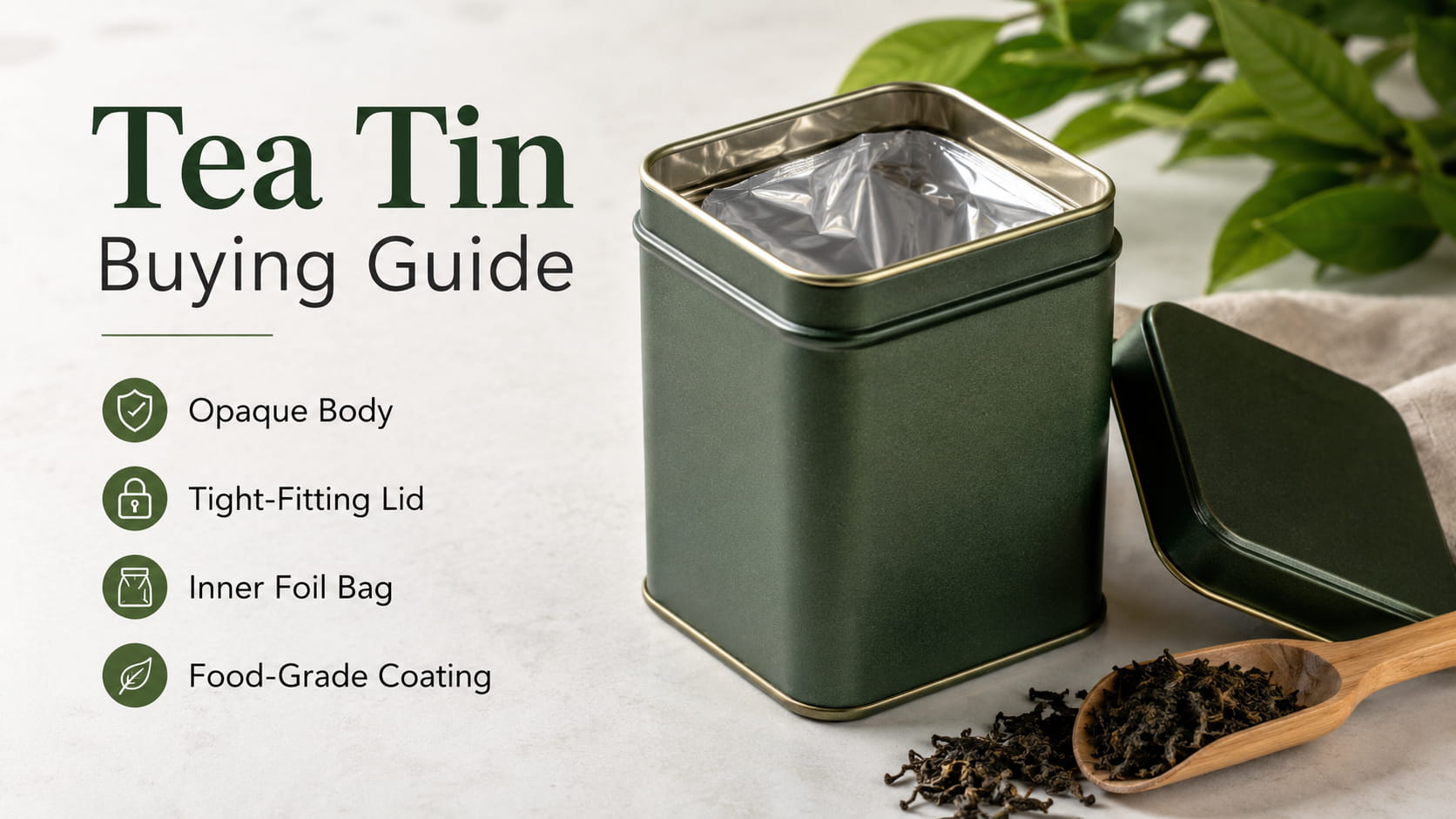
For many tea products, the best protection comes from a simple combination:
Inner foil bag + metal tea tin.
The inner bag protects the tea from air and moisture. The metal tea tin blocks light, protects the product from impact, improves shelf presentation, and gives customers a reusable tea canister.
This combination works especially well for:
Green tea
Matcha
Premium loose leaf tea
Scented tea
Herbal tea
Tea sold in humid regions
Tea with longer shelf display time
When you use an inner bag, design the tin around the actual bag size, not only the tea weight.
A tin may look correct in a drawing, but the real pouch may be too tall, too wide, or difficult to remove. The opening also needs enough space for filling and daily use.
When developing custom tea tins, always test with the actual tea bag or foil pouch. This small step can prevent many production problems.
Tea tin capacity can be misleading.
Different teas have different densities. For example, 50g of rolled oolong tea may take much less space than 50g of white tea or herbal tea. Matcha powder, tea bags, and loose leaf tea all need different internal volumes.
If the tin is too small, the tea may get compressed. If the tin is too large, too much empty space remains inside. More empty space means more air around the tea after filling or after opening.
Before confirming the tin size, check:
Tea type
Tea density
Filling weight
Inner bag dimensions
Spoon or scoop size
Shelf display space
Carton packing efficiency
Customer storage habits
Do not rely only on estimated capacity. Use real tea, real inner bags, and real filling weight before mass production.
The inside of the tea tin matters as much as the outside design.
Many tea tins use food-grade tinplate with a clear or gold internal coating. This coating helps separate the tea from the metal surface and supports normal dry food storage.
If the tea will directly touch the tin, ask your tea tin manufacturer about food-contact suitability. If the tea already comes in an inner foil bag, the direct contact risk is lower, but inner coating quality still reflects the overall packaging standard.
Before placing an order, ask:
What material is used?
What is the tinplate thickness?
Does the tin have an inner food-grade coating?
Can the tin contact tea directly?
Can test reports be provided if needed?
Does the manufacturer have experience with similar tea packaging projects?
A professional tea packaging supplier should answer these questions clearly. Printing and price matter, but they should not be the only discussion points.
7. Select a Shape That Fits Branding and Logistics
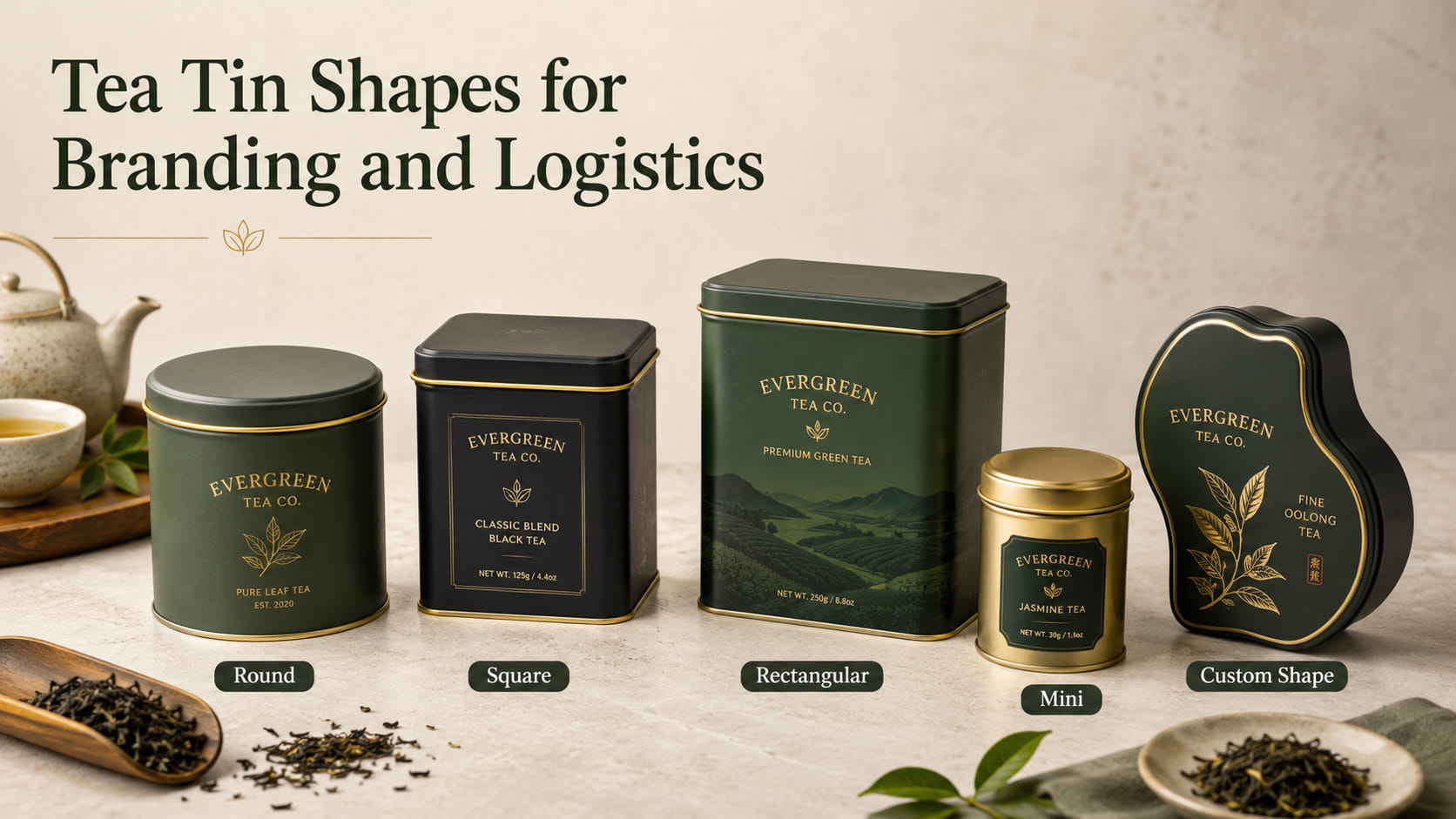
A tea tin shape must not only look attractive. It must also work during filling, packing, shipping, retail display, and daily use.
Round tins look classic and traditional. Tea brands often use them for loose leaf tea, especially when they want a premium or heritage-style appearance.
Square tins look clean and modern. They save space on shelves and in shipping cartons.
Rectangular tins work well for tea bags, assorted tea packs, and gift sets. They stack easily and display neatly.
Mini tins suit samples, travel packs, matcha, gift sets, and promotional tea products.
Custom shapes help a brand stand out. They also require higher mold cost and longer development time, so they fit seasonal gift lines, premium collections, or long-term packaging plans.
A good shape should support both brand image and practical handling.
Quick Decision Guide
Use this simple path when choosing a tea tin.
Q1: Is your tea powder, such as matcha?
Choose a screw-top tea tin with an inner liner or sealing ring. A wide opening also helps with scooping.
Q2: Is your tea premium green tea, white tea, or scented tea?
Choose a fully lightproof metal tea tin. Use an inner foil bag. For stronger aroma protection, choose a double-lid structure.
Q3: Is your tea consumed quickly, such as daily black tea or roasted oolong tea?
A plug lid, slip lid, or hinged-lid tin can work well, especially with an inner bag.
Q4: Is your product mainly tea bags?
Choose a rectangular or hinged-lid tea tin. Focus on stacking, opening convenience, and shelf display.
Q5: Will the product sit under strong light?
Avoid transparent windows. Choose a fully opaque tin body with stable printing and surface coating.
Q6: Will the tea be sold in humid regions or stored for a longer time?
Use an inner foil bag. Choose a lid with better closure, such as a double lid, screw top, or gasket seal.
Q7: Is this a premium gift product?
Choose a custom tea tin with better surface finish and opening experience. But do not sacrifice closure quality for appearance, such as using a beautiful hinged-lid tin without an inner bag for moisture-sensitive green tea.
Many tea packaging problems come from small decisions made too early.
One common mistake is choosing the tin only by appearance. Good design helps sales, but the tea tin still needs to protect the product first.
Another mistake is choosing the size only by gram weight. Tea volume changes with leaf shape, density, and packing method.
A third mistake is ignoring the lid fit. Even a strong metal tin performs poorly if the lid feels loose after repeated use.
Some buyers also forget to test the real inner bag. The drawing may look fine, but the actual pouch may not fit well.
Another common issue is over-specifying the structure. Not every tea needs the most expensive lid. For fast-moving tea bags or daily tea products, a simple and practical tin may be the better choice.
From production experience, many packaging revisions come from the same cause: the tin was approved before testing with the real tea, real pouch, or real filling weight.
The best approach is simple. Match the protection level to the product value and storage risk.
Before placing a custom tea tin order, check these points:
Is the tin fully opaque and lightproof?
Does the lid structure match the tea type?
Is the tin size tested with real tea or real inner bags?
Is the opening wide enough for filling and daily use?
Does the tea need an inner foil bag?
Is the inner coating suitable for food packaging?
Is the shape efficient for shipping and retail display?
Does the surface finish match the brand positioning?
Can the supplier provide samples before mass production?
Can the structure be adjusted if the first sample feels too loose or too tight?
This checklist looks simple, but it can prevent many avoidable packaging problems.
Back to the First Question
If your tea loses aroma, color, or freshness too quickly, look at the container first.
Does it block light?
Does it reduce air exposure?
Does it keep moisture away?
If one of these three points fails, even good tea can lose quality faster than expected.
Choosing a tea tin is not about selecting the most complicated structure. It is about choosing the right structure for the right tea.
A practical tea tin should protect the tea from light, air, and moisture. For daily tea products, a simple metal tin may be enough. For premium or moisture-sensitive tea, an inner foil bag, double lid, screw-top lid, or silicone gasket can provide better protection.
Start with the tea type, filling weight, storage time, and retail positioning. Then decide the tin material, lid type, size, coating, and printing finish.
Need advice for a specific tea product? Send us your tea type, filling weight, and expected retail positioning. We can recommend 2–3 mature tea tin structures that balance protection, cost, and brand presentation.

Obtenez les dernières informations et offres spéciales


 Réseau IPv6 pris en charge
 Français
 English
 Deutsch
 Español
 Português